
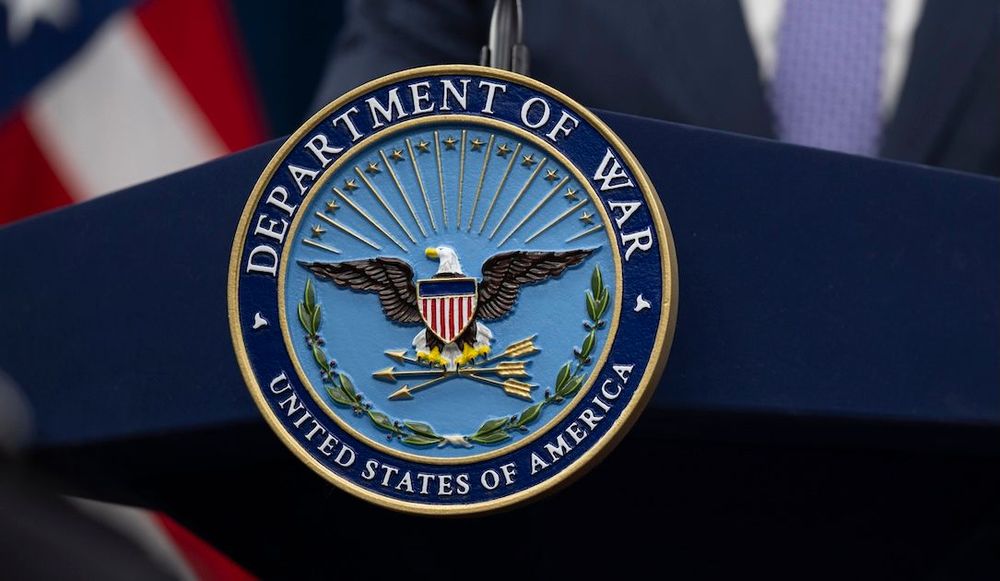
After reports on suicide deaths, Pentagon puts Cyber Command on notice
The Pentagon’s top cyber policy official last month instructed U.S. Cyber Command to take a series of quick, mandatory actions to better safeguard the well being of its personnel in the wake of recent suicide deaths.
“As we look to expand and enhance the long-term resilience and readiness of our cyber forces, we must establish formal, proactive structures to support our operators,” Katherine Sutton, assistant secretary for cyber policy and principal cyber adviser, wrote in an August 31 unclassified memo to U.S. Cyber Command chief Army Gen. Joshua Rudd.
The directive, obtained exclusively by Recorded Future News, was sent after initial news reports this summer of a suicide cluster at the command. The incidents pushed concerns about mental health and wellness to the forefront of the military’s cyber enterprise and sent command officials and congressional lawmakers alike searching for ways to surge more resources to such efforts.
Sutton’s memo amounts to something of a bureaucratic warning to Cyber Command to act swiftly to address the issue. It remains unknown if daily workloads were a factor in the suicide deaths, however the memo signals that senior officials are aware of the possibility.
The “continuous, high-tempo nature of ongoing active cyber operations imposes a unique cumulative, cognitive and psychological toll,” the memo states. “Unlike traditional kinetic forces, cyber teams lack standardized periods of operational restitution, reconstitution between deployments which impact retention and long-term analytic performance.”
Sutton called on the command to “transition from a reactive posture to a systematic, proactive force preservation model” by implementing seven steps.
The first two, which are supposed to be completed within 30 days, asks the command to provide four years of “historical organizational climate survey data and standardized exit interview summaries” to establish a health baseline for the force.
Cyber Command must also finalize a memorandum of agreement with the National Security Agency — which is co-located with the military unit at Fort Meade, Maryland and also helmed by Rudd — to share mental and behavioral health professionals within the “operational spaces” of the Cyber Mission Force (CMF), the command’s main action arm, as an “interim capability pending establishment of enduring support capacity,” the memo states.
The command has until mid-October to create a Cyber Occupational Resiliency and Engagement Framework to serve as an “enduring mechanism to support operator wellness, resilience, and performance sustainment across the force” and implement force employment and “dwell phasing”measures to improve recovery predictability, reduce cumulative operational strain, and sustain readiness” within the CMF.
The request is to ensure Rudd follows through on an action the department said it would take in response to a provision in fiscal 2024 defense policy bill to study the "occupational resiliency” of the CMF.
Spokespersons for the Pentagon and Cyber Command did not respond to a request for comment by the time of publication.
Time away
Air Force Col. Dan Kim, the senior military adviser in Sutton’s office, last week alluded to brewing initiatives meant to alleviate workloads during a presentation at HammerCon, an annual event by the Military Cyber Professionals Association.
He said the department is working on “optimized unit phasing” that would allow cyber operators “who are most of the time 100% in contact” with adversaries to step away from their keyboards, regardless of operational demands.
Kim also said the command is developing “elite performance modeling” based on U.S. Special Operations Command’s Preservation of the Force and Family program that puts the “human at the center.”
In her memo, Sutton gave Cyber Command 60 days to review and submit a proposal to modify consecutive tour policy for cyber operators.
“The proposal should incorporate career pathing opportunities, technical instructor duties, and educational assignments that interrupt continuous operational stress.”
The command must also appoint someone to co-lead the Governance and Cyber Wellness Working Group — another creation that was promised in response to the previous defense policy bill — and serve at the primary liaison between Fort Meade and Sutton’s office on wellness efforts.
Lastly, the command must work with DOD and the Joint Staff to review and prioritize the order of digital warfighting campaigns, which takes most of the year to hammer out and usually starts in the Spring, in a way that balances operational demands with long-term force health.
A source familiar with Sutton’s memo said many of the benchmarks it detailed were contained in the implementation plan for “Cyber Command 2.0,” the department’s revamp of the command and its forces, but were moved up, in some cases by years, following the suicide deaths.
This person, who spoke on the condition of anonymity to discuss the memo, speculated that the new Cyber Talent Management Organization created by the overhaul would take the lead on many of the efforts but voiced concerns that the organization is still in a developmental stage.
Permanent ‘surge’
In the meantime, senior military cyber officials say they are more aware than ever of the mental challenges facing the country’s digital warriors.
“At some point, our surge just became the pace,” Col. Bryon Owen, the chief of staff at Marine Forces Cyberspace Command, said during a panel discussion at HammerCon.
“It's hard for us to understand how this affects people who have to fight from home. That's, I think, a significant challenge for us.”
Owen added his cyber branch requested badges for chaplains and religious program specialists to be able to access operational spaces.
“That made a significant difference. And for the first time, troopers are saying, ‘Hey, sir, can I have a second?’ And it was life changing.”
Lt. Gen. Christopher Eubank, who helms Army Cyber Command, noted that two weeks into Operation Epic Fury — the military’s now eight-month-old conflict with Iran — he “had to tell people to go look at clouds. Touch grass.”
He said that his team further found that for operators “their hobbies are just like work.”
“So they were going home at night. They were popping Red Bulls, putting on VR goggles and getting after ‘Call of Duty.’ And coming back to work to do it all again,” he told the audience.
“We had to actually institute … rest plans, because you [have] to keep them cognitively resilient. It should have been a blinding flash of the obvious, probably.”


Martin Matishak
is the senior cybersecurity reporter for The Record. Prior to joining Recorded Future News in 2021, he spent more than five years at Politico, where he covered digital and national security developments across Capitol Hill, the Pentagon and the U.S. intelligence community. He previously was a reporter at The Hill, National Journal Group and Inside Washington Publishers.